District Bus Shelter - BQSKAP-10 - Womens College - 6x5+40x5+6x5
Womens College, Kadapa, Odisha
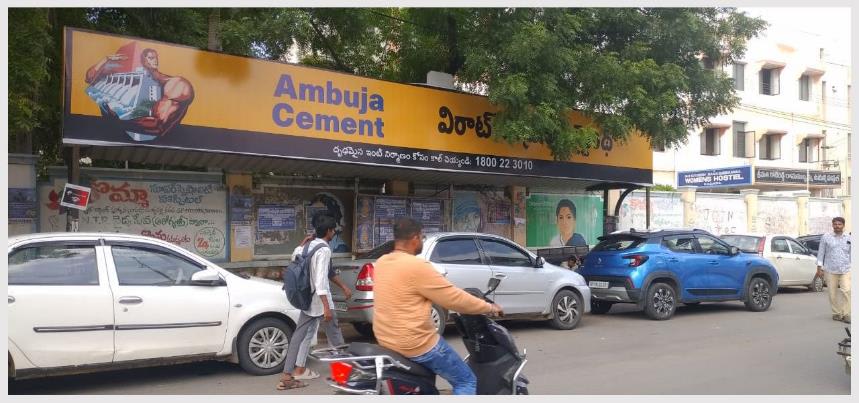
Property Details
Property TypeHoarding
Lit TypeNon-Lit
Size (W x H)52 x 5 Feet
Square Feet260 sq ft
Traffic Data42k+ unique reach/ week
AvailableImmediately
Rate per Sq Ft₹77 / sq ft
Description
 AI Insights by HoardSpace
Overview
District Bus Shelter - BQSKAP-10 is a large-format hoarding located at Womens College in Kadapa, Odisha. With impressive dimensions of 52 ft × 5 ft, this non-lit hoarding offers substantial horizontal visibility along a prominent educational corridor. The property is strategically positioned in a locality characterized by consistent student footfall, faculty movement, and daily commuter traffic serving the college campus and surrounding residential neighborhoods.
Location Highlights
The hoarding is situated at Womens College, an institutional landmark that anchors this section of Kadapa. Educational institutions in tier-2 and tier-3 Indian cities typically generate concentrated foot traffic during morning and evening hours. The locality likely features a mix of residential colonies, small commercial establishments catering to students (stationery shops, food outlets, photocopying centers), and local transport hubs. Approximate estimates suggest the surrounding area experiences moderate daily activity driven primarily by the academic calendar and routine commuter patterns.
Traffic & Footfall Insights
Estimated Daily Vehicle Traffic: 8,000–18,000 vehicles/day
The road serving Womens College likely functions as a collector road connecting residential areas to the main commercial zones of Kadapa. Traffic consists primarily of two-wheelers, auto-rickshaws, college buses, and private cars.
Estimated Daily Footfall: 3,000–8,000 pedestrians/day
Pedestrian movement is concentrated around college operational hours, with students, faculty, parents, and local residents forming the majority.
Peak Activity Periods:
- 8:00 AM–10:00 AM (college arrival time)
- 4:00 PM–6:00 PM (college dispersal and evening commute)
Primary Audience:
Young women (18–25 years), college faculty, parents, local residents, and daily commuters.
Advertising Potential:
The extended horizontal format is ideal for sequential messaging or multi-brand campaigns. Being non-lit, visibility is strongest during daylight hours. The surrounding locality may experience reduced commercial density compared to Kadapa's central business district, but consistent daily exposure during peak college hours provides reliable audience engagement.
Hoarding Specifications
- Dimensions: 52 ft (W) × 5 ft (H)
- Total Display Area: 260 sq ft
- Monthly Price: ₹20,000
- Property Type: Hoarding
- Lighting: Non-Lit
- Visibility: High during daylight hours; faces commuter and student traffic
- Suitable Advertisement Size: Full horizontal banner format; multi-panel creative recommended
Best Suited For
- Educational services (coaching centers, online learning platforms, skill development courses)
- Youth-oriented FMCG brands (beverages, snacks, personal care products)
- Fashion and lifestyle brands targeting young women
- Mobile networks and digital payment services
- Banking and financial literacy campaigns
- Government awareness initiatives (health, safety, social welfare)
- Local retail and hospitality businesses
Why Choose This Hoarding?
- Extended horizontal format allows creative storytelling and brand sequencing across 52 feet
- Positioned at a high-footfall educational institution with daily student and faculty exposure
- Cost-effective monthly investment of ₹20,000 for substantial display area
- Captures morning and evening peak traffic when attention levels are high
- Located in a stable, repeating-audience environment ideal for brand recall campaigns
Campaign Suggestions
- Launch sequential messaging campaigns where the narrative unfolds across the 52-foot span as viewers move past the hoarding
- Promote semester-linked offers for coaching institutes, targeting admission cycles
- Run youth empowerment and women's safety awareness campaigns aligned with the college demographic
- Advertise affordable fashion, cosmetics, or accessories with visually engaging creative suited to young women
- Use the extended space for co-branding opportunities or multi-product launches
Important Note
Estimated traffic, footfall, and weekly unique reach figures are approximate locality-based projections derived from typical patterns observed near educational institutions in tier-2/tier-3 Indian cities. These are not measured statistics specific to this hoarding. Reliable public measurements are unavailable. Actual audience exposure may vary based on academic calendars, seasonal factors, and local events.
Select Campaign Dates
Start Date
Months
End Date (Calculated)
Pricing Details
Monthly Rent Price₹20,000
₹3,120
Mounting Charges (₹5/sqft)₹1,300
Printing and mounting are one-time charges. For subsequent months, only the rent will be applicable.
Total CostDuration: 1.0 Months
₹24,420+ GST
Location Map
Open in Google MapsRecommended Hoardings
Other listings near this location.